Wednesday, 15 April 2015

Sting like a bee and NOT floating like a butterfly


A good definition of vulnerability


This post is about humility, vulnerability and friendship - something I really wanted to share, because it is part of success but much less spoken about. People talk about failure as a whole, but less about the gritty undignified details, so I thought I will let rip and wax lyrical about this. 
A combination of training for a Brazilian Jiu Jitsu tournament and a Figure competition in a hot humid country, teamed with life's curveballs culminated in an untimely Staph infection on my right thigh. An infection as stubborn as I am. The outcome of which was a visit to the Thai Government hospital (miscommunication to the taxi) and a minor operation on my leg with no anaesthetic. 
Now...I do love a novel experience and being operated in a hospital on your own with nobody speaking English is certainly one of those. Thai government hospital is most definitely not the same as private and this is a place you will not find many foreigners, pain relief or anaesthetics. On returning from the hospital, I then got stung by a bee and definitely didn't float like a butterfly. All this was a strong reminder of my own vulnerability and lesson on humility. 

I spent that evening scared, frustrated, in pain, lonely and bewildered, because the last time I had a Staph infection I was in hospital on IV Vancomycin for weeks. No amount of positive thought or meditation was going to change that. I did however get to watch a group of monks going through the same A&E process, which was comforting to know that even the most spiritually evolved of us struggle. 

It did make me ask the question of why is it so bad to feel bad? Should we enforce positivity when it just doesn't feel authentic or right? Self imposed negativity is never great but acceptance of sadness, grief, doubt and despair is necessary for the experience of happiness. One can be peaceful and calm in moments of catastrophe and the only difference is acceptance. It's such a powerful thing; it is also the last step in the apparent grief process (although I question those conventional steps!) so I say... why not skip straight to it, it makes life a lot easier than experiencing all the interim stages. 

I have failed many times because I have tried many things. I've therefore tested my strength but also the strength of those around me. Through adversity, I have found an iron will, great friends and unconditional unwavering love from my family. Those that walk away....let them go. Learning to be vulnerable and who to share that with is a great quality; it strengthens human connection and ultimately creates a more fulfilling life. 


Friendship


I have leant a lot about friendships recently. Some people come into your life for a day, a week or longer. Some are here to stay for good and others are not. I have had strangers show me extraordinary kindness and that was nowhere more apparent than today from a British Paramedic here who helped me clean and care for my wound; so thank-you. (https://www.facebook.com/people/Mark-Divemaster-Medic/100008875246260)

I'm lucky to have two wonderful friends come into my life recently; one from the past and a new friendship. It's not the trite pseudo positive statements that motivate me but the real gritty demonstration of authenticity that inspires me. Their resilience, fortitude, fragility and courage that really reminded me of my beliefs about sportsmanship. It's for that reason I choose to continue to do my bodybuilding show in under two weeks, despite being pumped full of antibiotics. I will train with kindness and compassion to myself for the next few days, with the emphasis on recovery. It isn't about winning or losing, it's about doing your best and enjoying it. On this occasion, just showing up will be a success and I feel that is an important message to communicate. So, I shall don my smallest bejewelled bikini, a big smile, my best friend, a tan coloured bandage and enjoy every minute. After all, is this not what all this is about? - learning how to get up from being down, working hard, sharing and enjoying all that comes with it. 
Thank-you to adversity and challenge for showing me what matters and who matters. 


Saturday, 11 April 2015

Letting go and life lessons from climbing

Life lessons from climbing - Trust, belief and commitment

This post was inspired by enforced bed rest from a run down immune system and accompanying Staph infection, which isn't ideal two weeks before my next Figure bodybuilding competition, but on a positive slant it is an opportunity to practice lessons I learnt the hard way; one of which is mother nature always wins. If the body needs to rest, it will let you know very clearly and I've found pushing against this creates nothing but absolute chaos, breakdown and worsening of a condition. It's a really tough lesson for athletes to learn because coping with discomfort, pain and fatigue is a necessary part of training and adaptation, but being able to distinguish between a genuine need for rest is a skill worth knowing. I personally like to take an intuitive approach to rest days; imposed when needed or bypassed when not needed, but I have no fixed rule about this. As part of rest or recovery, being able to focus on the positives, in place of the negatives is a huge part of mental relaxation. Instead of fixating on a growing infection I opted for watching outdoor rock climbing videos! It's a hobby I love and watching the world's best climbers is extremely relaxing because it's a beautiful contradiction of effort and ease. I've observed that the best climbers all seem remarkably good at balancing that intense desire for a goal with the ability to mentally "let go" when things are going wrong. I wonder if perhaps this is something more observable in extreme sports (where the life/death stakes are high) because it simply isn't possible to achieve these physical feats without that combination. I also think this mind set is beneficial, necessary and transferrable to other sports. When things seem impossible, sometimes the best thing to do is just try less hard.

Life lessons from climbing


Enforced rest is actually a lovely chance to reminisce over past climbing trips and revisit things that have really helped me today. Technically I'm not a good climber, I'm strong but I have the interesting ability to make easy things look really hard. I don't have that beautiful ease and grace that you see in the best climbers. I'm more like an oversized feline that has got stuck up a tree and refuses to come down; claws deeply embedded into whatever it can find, so again I will not be talking about technicalities of climbing and movement but more about the profound lessons I learnt as a beginner which have served me so well in life and competition.

Surrendering


There is this beautiful moment that comes when you surrender to a difficult situation and just accept "it is what it is". It allows you to take action from a place of calm. This situation may face you multiple times on a challenging climbing route and this is where those things such as: trust in yourself and your belay partner, belief and 100% commitment to a move really matter. There will be moments where a full-on integration of mind and body needs to happen in order to make the impossible possible.

Having to repeatedly face these moments where I was climbing continuously above my comfort level, a rather interesting thing happened - I learnt to relax in terror, because it simply would not have been possible to do what I wanted to do from that place of fear and tension. Believe you me there were many moments of tantrums, blame, tears and despair, all of which were not going to do anything to help the situation except expend energy I didn't have and infuriate my climbing partner!

Learning to stay calm and focused amongst fear (perceived and real) is possibly one of the biggest and best lessons I have learnt in dealing with challenging situations. It also gives you confidence to try harder things because facing fear diminishes it and therefore enjoyment comes with that. Having just taken up grappling (and of course now competition!) as part of bodybuilding training, I'm really trying to apply this to a situation where you have another opponent to factor in. It requires a lot of focus to override my modus operandi of just chaotic fight but there have been fleeting moments of clarity under pressure and what a difference it makes. Infinite possibilities become visible and the game becomes truly enjoyable; which to me is the whole point of all this.
I am a jack of all trades of sport and competition but there are interesting lessons in being a generalist to a reasonably high level. I love that all sports teach us something. I love that these lessons are universal and can be applied to anything - but more than anything I love being a beginner and being curious because you can find something in anything.

Monday, 6 April 2015

Life Lessons from a Brazilian Jiu Jitsu tournament


The last week of my life involved total immersion in twice daily Brazilian Jiu Jitsu (BJJ) training and getting ready for my first tournament (Copa de Bangkok). This whole competition prep was to take place in just over one week, which could be classed as stupid or brave or possibly both, but I learnt more about myself, others, the sport and sportsmanship in one week than I could possibly imagine. 

I certainly will not be waxing lyrical about the technicalities of BJJ because my knowledge of this and the points scoring is virtually non-existent. To cut a very long story short; I lost my fight on points to a competitor with 2 years experience, gained a bronze medal and found my human spirit again. Shared experiences and connection are so vital to human health and happiness and this was found in abundance; during hours spent training and travelling to Bangkok either sharing a bus seat or a bunked youth hostel room with 20 other male fighters. 

For me, this experience was a personal initiation test that could only have been a success just by taking part. Although I'm brand new to grappling, my journey with martial arts is not new, but a head  injury from a concussion combined with dehydration stopped my Muay Thai fighting dead in it's tracks about 5 years ago and I had always assumed I would never be able to go back. It seems you can; it also seems you can never truly leave it behind because the lessons it teaches you are so deeply entrenched. These are a just a few things I took away from a week in a completely new setting and sport. 

1. Creating a positive gym vibe


When I asked to compete in the BJJ tournament, I had a total of 1 "no-gi" session and had never worn a gi (the BJJ uniform) before. I was greeted with the biggest of smiles from an excellent man; Prof Olavo Abreu, who was so encouraging and relaxed about the whole thing. I haven't encountered heart, passion and enthusiasm like this in a long time and this was extended to the most beginner of beginners (me) right through to the best of the best. There is a zero tolerance for purposeful malicious intent in the gym I trained in (Phuket Top Team), made possible by good instructors and that, I think is vital for creating a good training environment. I don't know enough about the sport to comment on whether that is a trait common to it or not, but observing this etiquette at the tournament throughout pretty much all competitors, I can assume good sportsmanship is embedded in the training philosophy. 
The effect of training in a positive environment is also extremely infectious and motivating. People helping each other and trying to get the best from themselves and those around them really aligns with my values and beliefs about the essence of sport and it is so lovely to see this act out in a real way that is beyond dreamy idealism. 

2. Creating a positive team


This then leads intuitively on from the previous point to creating a positive team. I am a very solitary person so to travel and train intensely with people even for a week was an onslaught to my senses. In training and competing, your body and soul is laid bare for all to see - literally. In the grappling sports, there is no room for shyness! But to travel with 20 men, factor in some serious Bangkok bus sleep deprivation and pre competition nerves is a serious test to "group" character and this was immense. I haven't had so much fun in a long time; the group dynamic was impressive, positive, relaxed, serious, caring and compassionate all at the same time. There were win's and losses in our group but everybody conducted themselves and helped others in a way that was seriously inspiring and a demonstration of the true human spirit. No arrogance or sulking at any time. 

3. You cannot train for competition


You absolutely can't train for competition and so this experience is invaluable. Female fights is slightly more tricky in martial arts and especially here in Thailand so you take what there is but ideally matching the skill level and opponent can really make an experience good (or bad). In the end however, competition is about preparing for uncertainty and that's why it is such a good lesson about humility. Everyone is beatable - two hands, two legs, same weight - everybody can win and lose. My personal experience is taking amateur or inter club level competitions early on is a good way to progress and to learn about competition as there just isn't any other way to prepare. You can't train for the nerves, adrenaline, fatigue and how that will work for multiple bouts. I was nervous, especially after watching two hours of competitions beforehand which is something I never would have done for Muay Thai. By the time I came for my fight I was a stoic mess of fatigue, but I was also pleased to note that the fighting instinct never leaves you and that is something I needed to know after years of not fighting. I still have that fire in my belly for a "fisticuff"; I also know that strength will not beat skill in BJJ! Something that was rather nice to see. I like to be humbled and strength is something I have a lot of, so I rely on it a lot - but it can only take you so far in this sport. I was also knackered after just one 5 min bout - "note to self" - pacing! 

4. Transferrable skills


The lessons that martial arts teaches you are usually centred around: humility, sportsmanship, work ethic, discipline, courage etc. I was lucky I had someone patient enough to show me this through action over a number of years. I'm also grateful that those lessons once learnt don't leave your side and I found that this "inside-out" approach to training can then be used in a whole manner of things. I used this approach in bodybuilding training for my first show (Figure) and it became a "constructive" process to my character rather than a "destructive" one and I wonder if without this grounding in  martials arts philosophy whether the outcome would have been very different. I also believe, the combination of training, competition and a skilled coach/mentor can coax these traits out in almost anybody. 

5. Meditation for focus, recovery and information retention


I started to use meditation and mindfulness as above, whilst I was prepping for my first figure bodybuilding competition as I needed this element to balance out the ethos of the sport. It has proved invaluable to getting the best out of myself (and others) by improving focus, self-motivation and building a really robust mind set. I found 10 mins of meditation and breathing before BJJ class really helped deal with information overload from learning new techniques every day. It also helped hugely in dealing with competition nerves in a completely different setting and situation, with no close friend anywhere in sight. It also helps with recovery as you learn mastery over emotion and staying calm is a huge part of this. Being able to detach from emotion and release tension is hugely underrated in the recovery process. 

A final note


I've come to this sport a little older now, a little wiser (I like to think) with the ability to train smarter. I also have a whole catalog of mental skills I didn't have years ago which made my coping mechanism of a potentially very stressful situation nothing but huge fun and enjoyment. I wasn't just a little out my comfort zone but hugely out of it and being calm amongst uncertainty is one of the ways to enjoy life, as that is the only certainty we have - we don't and won't ever know how the story tells itself. Competition is an excellent way of learning to deal with that and transfers to all other areas of life. Being around positive passionate people was the biggest and most inspiring lesson for me. This is so vital for doing anything ambitious because it is just really hard on your own. Being vulnerable and strong are compatible and necessary, and understanding the place for both is part of this journey. Being appropriately out of one's comfort zone will usually be accompanied by personal growth but knowing how and what you need to grow are also part of this lesson. The team made my experience one which I won't forget and one which has been lacking in my life for a long time. You can be alone and connected which is not the same as being alone and disconnected and that is my lesson learnt. A very nice one. Thank-you to all involved. 


Friday, 27 March 2015

Brazilian Jiu-Jitsu meets bodybuilding - a beginners mind


I'm back here again in Thailand training for my bodybuilding (figure) competition at the end of April and I decided to shake things up a little with some training in Brazilian Jiu-Jitsu  (BJJ) and No-Gi. I originally did this for some core training but there is a whole other element of training like this which is surprisingly pleasing. It is another sport where I can express authenticity and I think to shrink our identities sometimes is a dangerously limiting road to go down. It was also a welcome positive distraction from mounting feelings of overwhelm about stepping on stage in a bejewelled bikini smaller than my thumb nail. 

Unsurprisingly, my "all or nothing" personality took to this challenge like a bull to a red flag and within one week of training I've entered a Tournament in Bangkok for the following week. 
I'm not a beginner to martial arts, but to BJJ absolutely yes. I have strength but no skill - which isn't a combination which works against anyone with any competence. Training in a fighters gym, there are not many with no competence. So, although this may sound absolutely crazy on all fronts being so close to my bodybuilding competition, there is in fact logic to the madness because I wanted to try and address the following questions? 


  1.  I train in a very intuitive mind-body way which is about making "hard things fun" through mindset changes, because it creates motivation and focus. Can I apply this to a very challenging situation; one that puts me far far out of my comfort zone. Can I manage the stress, so this is a truly fun, positive and enjoyable experience? Can I overcome my own fear of uncertainty?
  2. What effect does two weeks of pre competition BJJ training have on my physique and physiology?
  3.  Is there value to integrating competition really early on in learning a sport, so you learn how to compete - and by this I mean how to win and lose with grace and humility so it is an experience that ultimately builds character and is motivating. I can't help thinking delaying competition builds up expectations, pressure and takes away the ease and fun of a sport. Is there value in doing the two side by side? Thai kids will take fights very early on in their careers and I wonder if there is some learning in that. Learning to win and lose is a vital skill living in a society where fear of failure is rife. You can't shelter oneself from failure, it's a prerequisite of success and living a full life, so isn't the best way to deal with it, to learn and grow from it? 


I have been training for 10 days and trying to integrate this with a full-on schedule of pre-competition bodybuilding training and dieting in 35C heat, so it's not a masterpiece of efficiency and something that I will have to review. 

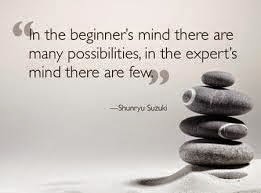
With a week to the tournament, twice daily 90min sessions of BJJ in this heat will be enough training for me. Being a beginner of any new sport is not an efficient use of ones energy anyway and it's really important to be mindful of that. It's taxing on all systems; physical, mental and emotional. Because I rely on strength so much as my only survival skill, I get a very good strength session both dynamic and isometric. It does however kind of defeat the point of this project a little which is to learn to be comfortable in uncertainty and to embrace learning of new skills; to cultivate a beginners mind, which requires leaving the ego at the door. This gives me a renewed compassion of new comers to weight training and I'm glad of this reminder, because we were all beginners at some point and sometimes the encouragement of a coach or friend was the thing that helped us gain enough momentum to stay the course. I'm very grateful to those that have been so patient with me. 

Abandoning my ego is a lot harder than I thought. I want to use strength, because that's pretty much the only thing I have. I think I can just about execute one move on a partner if they promise to just lie there like a dummy and don't move. The excitement of doing something new which feels very authentic and natural to me is also teamed with immense amounts of frustration, fatigue, expectation, confusion and every other emotion under the sun. 

I've spent a year building up confidence and competence in weight training gyms of all sorts and now the slow dismantling of ego begins; so this is a very interesting project for practicing what I believe in - how to  "make hard things fun" and applying this "inside-out" approach. This experience could be immensely positive or it could be immensely corrosive depending on what route I choose. It is the perfect opportunity for practicing being gentle on yourself to be really strong. I have to admit I failed miserably at this yesterday; the session culminating in me flailing and swimming around in my own sweat like a beached whale for about 2 hours, being face planted and arm locked by men twice my size. I did however manage to make something quite easy look immensely difficult and that I think is a skill in itself. However, like all things that go terribly wrong - refuelling and a good night sleep do wonders for resetting the button on mindset and so I'm writing this just before my first morning session but with a slight change to strategy and this is as follows:

  • Getting huge amounts of rest, staying calm, practicing mindfulness and meditation so I am in a good position to absorb and retain information. There is no room for frustration. 
  • Having appropriate expectation for how much I can learn in a very short amount of time.
  • Laughing.....a lot, perhaps not in class but certainly afterwards.

I continue to learn huge lessons everyday I do this; maybe I will stop after the tournament and maybe I won't - that is part of the journey.  I have been helped and encouraged immensely by sparring partners who have been patient beyond what is reasonable. This extreme of kindness and clinical destruction are an example of the many attributes martial arts trains and this is part of the many things I love about it. The lessons it teaches us about the spirit of competition, ourselves, others and life are hugely powerful, something I really hope I can help give back to those on their own fitness and life journeys. 

Monday, 23 March 2015

The power of the journal - A way into freedom and the authentic self.


I read a nice quote by Mark Twain the other day "The two most important days in your life are the day you were born and the day you find our why".


This resonated with me because I feel lucky enough that I am on my path to finding the latter and albeit one of zigzags and curves, it is a hugely fulfilling journey; one filled with passion, joy, motivation and of course challenge, emotional and physical growth (and the occasional whisky)! For me, finding my purpose in life started to manifest the moment I put my attention to becoming authentic. Allowing myself to find a way to work with and be at ease with the many aspects of my personality which contradict each other. People are in truth many things, at many times - we all are. I am primarily an introvert but also an extrovert when required!  A hard science academic but also a spiritual enthusiast. The list of contradictions goes on and on and I also find new ones as I evolve as a person. It is something that always confused and troubled me. I wanted to do both arts and science at school; but of the course the expectation 20 years ago was to choose one or the other. I chose science and maths, and that became my path through life; denying many things that I am because I couldn't explain the co-existence.


The crux point of becoming a more authentic person was actually finding an integrative holistic therapist (bodytherapeutics.co.uk) who was accepting and allowed me to be me in all my eccentric, non conventional, weird ways. He asked the right questions, listened and gave me the space to figure out what that was. And then...applying it to the real world i.e action! The suggestion was "Just try, being you and really being you?" What's the worst that will happen? You may lose friends but you may gain great ones.


I was scared to try this at first, to see the reaction on people's faces when I explain how I train, because my real interest in fitness and weight training is about mindfulness and experimenting with a system that rewires negative beliefs, making hard things fun. My task at present is about taking a conventionally brutal narcissistic sport (bodybuilding) and using a gentle approach to make it enjoyable and to create self worth along the way rather than punishment. It works and it works very well. To my surprise, not everybody spat in my face or laughed or made fun or walked away (some did!). I certainly don't preach this but I'm confident now in giving an authentic answer when asked about how I train and what program I use (one based on the placebo effect mainly). 
Most the time, people are interested and it has worked very well for those wanting to try a different approach. I have never really had a true understanding of all that I was and neither the courage to try to convey that, but to be able to speak your truth is a wonderful feeling. The more I practised communicating, the better I became at conveying that message and the more ways I can say it. I also know who not to share this with. I have attracted a better group of friends, well actually one friend but she is a great one and I would have her by my side over 10,000 acquaintances, because she has faith in me on days I lose mine.

My message is this - being authentic is necessary because it is an expression of your highest self and this can go a long way to creating freedom, happiness and inspired thought for how you want to share that.

I believe "how" you do something is important and how you go about training for a challenge, or for performance/results based sport is important. There are infinite ways to do this - some ways are corrosive and other ways build you up. Doing something in a way that is positive also prevents the inevitable depression and the "dark night of the soul" after completing a challenge. I have found being kind and encouraging to oneself, especially when you are naturally wired to be harsh, has a very powerful effect of creating relentless focus and flow, which in turn creates a better and more efficient training session. The effects are two-fold: better results and a more positive mind set.


How do you go about being more authentic?


One of the greatest resources I found for this was keeping a journal inspired by the book "The Artists Way" by Julia Cameron. The task was to write three honest pages of thought (on anything) every day and I did this for 60 days without fail, to build habit. Some days this was absolute gibberish and I occasionally have looked over past journals and cringe at my state of mind and some of the things I have written (or not written) hence the doodles of unicorns and Rainbow Brite. I also left one on Eva Air, so whoever reads that...it could rival Stephen King. But....writing honest thought is excellent for creating awareness, identifying and consolidating thought and drawing attention to what your values are. Mostly you can identify this through becoming aware of things that create either good or bad feelings. Knowing your core values in life is a really good skill set to have. I have found mostly when you're living a life not in alignment with these, problems happen. I'm lucky enough to know these are things like: freedom, learning, laughter, exploration (internal and external), challenges, teaching - I also know I can't compromise on this because they make me happy, without which I am no use to anybody. Taking responsibility for your own happiness is necessary, the upside to which nobody has the power to take that from you. It's part of building a robust self replenishing system and that is just necessary for living a blessed and a full life.


Tuesday, 10 March 2015

What is your belief about weight loss?


Our unconscious belief system is integral to the success of our goals, as it forms the sturdy foundation upon which everything else is built. In terms of fitness goals, training and dieting are really just the icing on the cake. Here's the thing; "will power" can only take you so far, so without a strong positive healthy belief system, it's going to be really hard work, not that much fun and possibly not very successful. This I know, from years of trying it - I'm fairly certain I've earned my 10,000 hours in the mastery of struggle.

Beliefs are the foundation of the placebo effect


Beliefs are essentially the placebo effect or conversely the "nocebo" effect and this is getting an increasing amount of attention in all area's of science - because it works, even though we don't really understand how.  It can be separated into (1) individual beliefs and (2) common belief systems held by groups of people. The latter of which forms the basis of our conditioning from when we are young; the things our teachers, parents and peers taught us. The problem with how we are conditioned is these things are often subjective and not reality. At one point in time we thought the world was flat, so even textbook science taught at school and central dogma changes over time. I think this is illustrated beautifully by the Richard Feynman's (Nobel prize winner) quote "science is the belief in the ignorance of experts" i.e even specialist scientists just don't know!

My issue with common beliefs and conventional thinking are they can act like the opposite of the placebo setting up a self fulfilling prophecy; one of the great examples of which is weight loss. 

Unconscious belief is different to just telling oneself positive words


I have to adopt the role of a generalist here, because there are always exceptions to every rule but most people's belief about weight loss is it is about deprivation, forbidden foods and having an iron will. This indeed was my approach for many years, and low and behold it was always extremely difficult, punishing and miserable! My new approach to bodybuilding is based on making everything fun and enjoyable so I had to apply this to dieting as well. I needed to change my belief about dieting to something that was easy and enjoyable, as opposed to being about "lack" and restriction.  The critical thing here is that it's not enough just to tell yourself something with positive thought it has to be subconscious, otherwise you're just intellectualising it. There are a growing number of interesting habit changing techniques out there including hypnotherapy, emotional freedom technique (EFT) and cognitive behavioural therapy, well worth an investigation. I've used a combination of things including daily meditation to great effect. 

Ask some very honest questions and observe your current situation to assess your belief system


Changing behaviour all starts with awareness of how you see things and what you believe. I think it is a great and necessary place to start before initiating any ambitious goal and asking honest fundamental questions including understanding your level of self worth and therefore how much you feel you deserve good things and people are part of that. Often our current situation is quite a good indicator of our beliefs anyway because the evidence is all around you.  Although we like to believe our situation is not always a product of our input, I think it always is at a very subtle level. That is my belief; that we are responsible for EVERYTHING - that we create our situation.

How to apply to an extreme diet?


After realising that my historical method of dieting was not only torturous but didn't work very well, I knew I had to go back to basics and change my relationship to how I viewed weight loss. It always goes back to the same question: What is the path of least resistance?  How can I make this easy? 

There are two things which have created a quantum leap for me in terms of ease of weight loss and leaning out for competitions.


  • 1. Monitoring hunger

Never allowing myself to get too hungry has been key as I have absolutely NO will power when it comes to a grumbling stomach and have even been known to raid a bin - undignified I know! It's makes me anxious, stressed and I don't sleep, initiating a whole cascade of detrimental psychological and metabolic effects. 


  • 2. There is no naughty or forbidden food. 


I'm very mindful of not attaching "good" and "bad" meaning to food. There is in fact NO forbidden food for me during prep now, because I think it's an unhealthy approach. It even makes me wonder whether our attachment to the meaning of the food is just as important as the food itself i.e what would happen if I truly believe a McDonalds happy meal will contribute to weight loss? as opposed to "this meal is going to make me put on weight", which sets up a whole internal dialogue before you've even sat down to eat it. 

The consequence of an all inclusive approach is rarely do I crave anything that's not really in alignment with my weight loss goals and if I do..it gets savoured and enjoyed guilt free. I admit whole heartedly to eating literally a whole tub of ice cream on a PMS day during prep and actually it was great, I loved every minute of it!

I don't weigh my food and I don't weigh myself. I sometimes eat 7 small meals a day and sometimes 2 large meals, because I feel like it. I'm the first to admit I'm starting out on this bodybuilding journey so perhaps it will change over time but for now it works a treat. I'm seeing progress with ease; I'm much leaner going into my second show and emotionally and physiologically very healthy. My menstrual cycle is unproblematic and regular and I haven't been ill once, despite not taking a single supplement, not even protein shakes. 

My approach is very intuitive and this has to be trained through awareness and mindfulness. Conventional belief about strict dieting and bodybuilding being hard is just that...it's subjective and a belief, but it isn't mine. My journey has been hugely enjoyable and the inevitable challenges are met with a sense of peace and acceptance. Although on occasion - a stiff glass of whisky, a rant and a few tears solve a problem beautifully; because I'm human! So...I challenge you to rethink why you think certain things; is it fact or fiction? It could just change your mind and body...literally.


Tuesday, 3 March 2015

Mindfulness of eating


My approach to bodybuilding training is very much from the inside-out; "mind first" and "body second". My theory is mental well-being facilities a healthy body and a healthy body is far more responsive to hard training. Instead of conventional bodybuilding training which focuses on effort and struggle (something I know lots about!), I've tipped it on its head and opted for following the path of least resistance - a much gentler and kinder approach. My experience is gentle encouragement and kind words to oneself and others seems to extract far more focus in the gym, which then translates into physical results.

This method works exceptionally well, it's transformative for both mind and body. Results and habits are ingrained into all elements of life and it's sustainable long term, because it's such an enjoyable process. Of course this strategy won't work for everybody but it is amazing what happens when you follow the path of least resistance, rather than opting for the hard struggle every time.

Moving the focus away from "food" to "relationship with food" 


What about a diet that never even mentioned food?  I wanted to really see if I could apply the inside-out approach to dieting. How can we still get weight loss results but change the way we look at diets from something that emphasises limited food options, deprivation and and having an indomitable will to something far more gentle, expansive and kind?
Of course this is the question I pontificate most over and I believe it's because we ask the wrong questions. Perhaps the question is not to identify foods that are good and bad but rather focus on a person's relationship with food and eating habits. How can you get to an emotional place where you just really "want" to eat clean wholesome unprocessed food? and will this still work on a strict bodybuilding prep diet?

Being a scientist, I like to observe everything. I could probably even watch cement dry and not be bored. Over time, I have noticed that women (and men) often report they lose weight when they stop trying, pressure is removed or they just relax...and this is really interesting. Conversely I also observe more comments about failed weight loss attempts despite trying really hard. This really paves the way for hypothesises about the biology of emotion; does emotion create physical state or state create emotion? Most likely probably both happen....

The cycle of thoughts, emotions and physical state


Thoughts and emotions create changes to the neuroendocrine system as well as to the central nervous system and some evidence now to even suggest at the fundamental DNA level. Fear creates quite a different state to being in love. An example of this could be an increase in the hormone oxytocin during bonding with loved ones. Oxytocin, testosterone, cortisol; they all affect metabolism and how the body uses fuel. It is also virtually impossible at the moment to single out a hormone and attribute  a precise role or set of roles to it, because we don't really know and I'm not fan of this kind of reductionist approach to how hormones (or nutrients) work in the body. The human body is incredibly complicated; suffice to say, science will most likely always be one step behind. The nobel prize winner Richard Feynman, renowned for his contribution in quantum mechanics sums this up beautifully when he said "science is the belief in the ignorance of experts". Essentially this means, science is negativistic; we just won't ever know all the answers but we'll generate more questions. It is a method that can try and provide understanding or a reason for why things happen but ultimately there is real value in just observation without trying to understand. Personally when I'm stressed during competition prep, I don't see fat loss results no matter how hard I try. There is no fat loss, no muscle gain.... just a bleary eyed emotional mess. This is also the case for many others I have spoken to going through the same thing. For any sustained period of time, stress and fatigue tend to equal lack of results and staying calm is often accompanied by obtaining positive results with ease.

In alignment with my path of least resistance manifesto, I therefore prioritise staying calm, happy and optimistic and this comes first; always. From this state; the possibilities for progress are infinite. In actual fact, I can even get away with quite a lot on the diet which makes me wonder whether building a resilient system can buffer the effect of foods that may not have otherwise be included on a conventional prep diet plan. In my case the odd whisky and chocolate!

In this current decade of knowledge, science is really gaining momentum and developing fast. New scientific fields are being created all the time to include research on consciousness and the biology of thoughts and emotion. The placebo effect is now accepted as "real" and good quality science is now being conducted in the areas of mind-body which has huge implications for understanding health and mental well-being, rather than just understanding disease and ill health which has historically been the focus of  traditional western medicine.

My current interest area is how quantum mechanics affects biological systems, I recently came across a book called the "Edge of Life" by Jim Al-Khalili and JohnJoe McFadden, which does an excellent job of communicating that. In essence, there is some evidence to say thoughts can affect the way genes are expressed. This is interesting because it means DNA and the genetic blueprint is far less rigid than we thought over a single lifetime. Humans are incredibly adaptable to environment and I have often felt uncomfortable about the way our ancestors behaviour is used to explain our modern day behaviour. Perhaps we might be have been able to digest meat a bit better in prehistoric times but most of us would have perished within about ten minutes of being thrown back to neolithic times. I can guarantee without sat nav I would walk head first into a primordial bog and probably mistakenly self-poison myself with berries along the way.

The point I'm trying to make is although humans evolve over generations, they also evolve over a single lifetime (short-term) and our knowledge of this short-term genetic change is still completely in it's infancy. We don't know what the the limit or even the average number of human  mutations over a person's lifespan are and even really how that happens; whether it is truly spontaneous or if there is something else driving it?

Application to the real world of eating


Emphasising our lack of understanding of genetics is relevant because perhaps we can  influence emotion and physiology more than we think right down to the DNA level and that has implications for metabolism and weight management longer term.
With advancements in neuroscience, we also know that neuron circuitry in the brain is far more malleable than we thought; and repetition and learning of new skills is one way to facilitate this neuroplasticity. Although we once believed information only passes one way - from DNA into protein, it now looks plausible information can pass the other way and that emotion and physical state can affect gene regulation at this very fundamental level.

Perhaps we don't have control over the creation of spontaneous thought (I suspect we do in a round about way) but we can master what we do with those thoughts. We can chose to accept and let negative ruminating thoughts dissipate before they gather momentum (the essence of mindfulness training) or we can attach meaning to them and then go careering off a precipice of doom and depression.

Mindfulness is about cultivating awareness of eating. Really listening and understanding one's body then lends power to making good decisions about food choices. Appetite and desire change on a day to day basis and that's ok, and also necessary. Feeling confident about waxing and waning with one's diet, differentiating real hunger from emotional hunger is incredibly empowering and a really useful tool for sustainable weight loss. It is also fairly easy and just requires slowing down and paying attention to food and appetite.
It is also easy to go one step further than simply awareness and induce a positive state before eating. Although I follow no form of organised religion, I rather like the concept of saying "grace" before a meal. It cultivates a lovely peaceful state of gratitude before eating a meal and really need take no more than a minute.

The take home message


The conclusion to all this, is positivity and calm are necessary for health, happiness and weight management. Optimism and positive mental habits can be learned and furthermore we just don't know what the true effects of this can be to our long term health and physicality. We may not ever know the answers but it's sure worth a try because the alternative doesn't work that well and isn't that much fun!